

How Experts Use AI to Streamline Incident Response and Eliminate Alert Noise

What small businesses can learn from enterprise AI Security Response
Cybercrime has changed. 79 percent of intrusions were “malware-free,” meaning attackers directly exploited stolen accounts or tricked staff rather than relying on traditional viruses. Breakout time, the window between an attacker’s first entry and their spread through the network, averaged 48 minutes, with the fastest case recorded at 51 seconds.
For a small business, that means the time to act is measured in minutes, not days. Attackers sell stolen logins from small firms on the same dark-web markets that offer access to banks and government agencies. Entry points are often simple: a fake invoice email, a phone call posing as tech support, or a compromised Microsoft 365 account.
Why Leaders Are Turning to AI security response
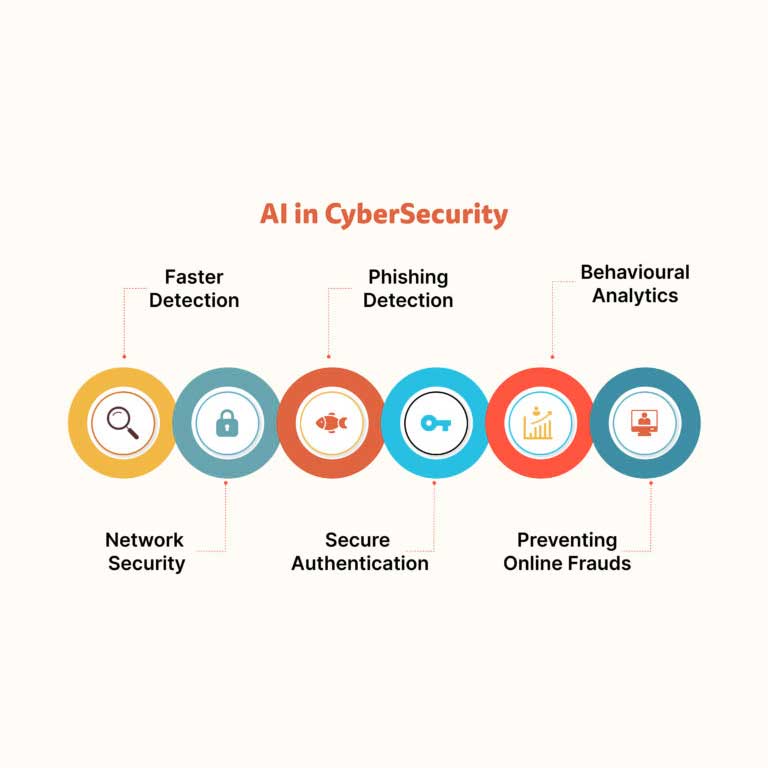
Cybersecurity leaders are now using AI “robot analysts” to handle the flood of alerts. These systems triage suspicious emails, spot unusual logins, and even quarantine affected machines faster than humans can react. One executive summed it up: “You’re going to have to use AI against AI, otherwise you’re going to lose, and you’re going to lose fast”.
For SMBs, the takeaway is direct. You may not run a 24/7 security operations center, but you can still benefit. Platforms like Microsoft 365 now embed Automated Investigation and Response (AIR), which runs phishing playbooks as soon as an employee reports a bad email. That means basic AI defense is already inside tools many small businesses are paying for.
Attack speed beats manual response.
Most damage happens fast. We use AI to link alerts, isolate the threat, and act in the first minutes.
Adoption Is Happening, Cautiously
A global survey by ISC2 found that 39 percent of cybersecurity professionals have already integrated AI security tools, and another 62 percent are employing or testing them. Among adopters, 70 percent report improvements in team effectiveness.
However, professionals remain cautious. More than half, 52 percent, believe AI will significantly reduce the need for entry-level hires in cybersecurity, while 44 percent say it has already changed their hiring plans. For SMBs, the point is not workforce planning but cost efficiency. AI security for small business can automate repetitive tasks like vulnerability scanning, email filtering, and account monitoring, letting limited staff or outsourced IT focus on higher-value work.
Guardrails and Governance
AI is powerful, but it is not magic. The National Institute of Standards and Technology (NIST) created the AI Risk Management Framework (AI RMF) to help organizations adopt AI responsibly. It emphasizes transparency, reliability, and alignment with business goals.
For SMBs, governance means three practical questions:
Industry experts recommend additional safeguards: keep human approval on sensitive assets, maintain a “kill switch” to shut down any AI function that misbehaves, and never allow automation to act on crown-jewel systems without review.
Practical Examples SMBs Can Use Today
Microsoft’s Defender AIR shows what AI security response looks like in practice:
These are not theoretical. They are live functions in software many small businesses already use.
Noise hides the real breach.
AI correlation pulls the signal forward so action happens before spread, not after.
How to Start
What It Means for SMB Owners
If you run a small business, here are the plain facts:
Small businesses face the same attackers as global giants, but without the staff or budget to match. AI is closing that gap. AI can take on the high-volume, low-risk work of filtering, triage, and first response. That frees humans to decide what matters most. The choice is not whether to adopt AI, but whether to use it with enough foresight to keep control.